
India's sourcing from China may not necessarily be for cost-effectiveness alone but also for the lack of domestic qualified bidders, technology or other know-how.

'We haven't flattened the infection curve, we may have merely smoothened it temporarily.'

Caught in the crossfire of Sino-India border skirmishes and strained by the severe impact of the pandemic on its business, Brand Hector is foregoing the bustle and frenzy for a quiet digital campaign that talks about its British roots, the smart tech powering its drive and its made-for-India models. The tone is subdued and the brand seems to be deliberately playing down its ownership by Chinese company, SAIC.
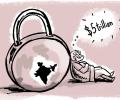
While seven companies bagged orders worth Rs 42,000 crore, industry experts said most of this new order activity was a spillover, and fresh project finalisation remains weak.

The pre-owned vehicles arm of the Mahindra Group plans to add 30 outlets in a few days taking the total number to 1,000.

Mandates have been handed out to staffing solutions companies such as Randstad India and TeamLease, officials at these firms have said, as players increasingly push into rural areas to capitalise on the uptick in the hinterlands.

This will have an impact on inflation as everyone in the value chain passes on the costs.

Several carmakers, including car market leader Maruti Suzuki India pulled the plug on diesel models citing higher costs for BSVI variants leaving buyers with limited options.

A knee-jerk reaction, they said, could be detrimental to the fortunes of an industry that is highly dependent on the country given the huge competitive advantage it offers, in terms of cost and speed.
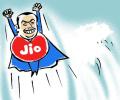
The COVID-19 pandemic and the ensuing lockdown may have put the best of funds on a backfoot of deal activity, RIL, however, has been an outlier. With 10 different investors brought in for its telecom venture Jio Platforms, RIL undertook 12 different transactions since April this year.

With RIL's market capitalisation crossing the Rs 11-trillion mark on Friday, Ambani is ahead of Google co-founders Larry Page and Sergey Brin, the 10th and 11th richest, respectively, and behind Zara founder Amancio Ortega on the Forbes Real-time Billionaires List.

'India should take up defence manufacturing in a more serious manner and encourage greater private participation.'

Govt has already approached World Bank seeking termination of contract. The progress of the project was just 20 per cent though the contract was awarded in 2016.

To be able to tide over the current crisis, automobile manufacturers have waged a war against all cost heads.

The demand for black oils and specialty products like fuel oil, bitumen, petcoke and sulphur has also shown marked improvement, facilitating increase of refineries throughput.

From auto, refrigerator, and mobile handset makers to real estate firms, companies are tying up with banks to dole out attractive finance schemes and discounts to make buying more affordable.

In a circular dated May 20, Sebi had directed the listed companies to evaluate the impact of Covid-19 on their capital and financial resources, profitability, liquidity position, assets, and ability to service debt. Instead, companies have spoken about the number of plants, warehouses and distribution centres that have resumed operations; work-from-home and safety measures undertaken for employees; and the labour shortage they are facing.

After the easing of lockdown in mid-May, auto companies were able to resume production in a phased manner, but the ramp-up was slow due to a broken supply chain, and lockdown-induced restrictions.

India's harsh lockdown has left companies grappling with temporary closure, chaotic supply chains and depressed demand. Consequently, business plans have been modified.
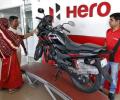
Besides regular buyers, there is lot of interest among those in essential services, such as health, banking, and IT. The sales will be helped by social distancing becoming the new normal in both urban and rural regions as people will be averse to using public transport.
 © 2026 Rediff.com - Advertise with us - Disclaimer - Privacy Policy - Sitemap - Feedback - About us - Terms of use - Grievances